AML E-Learning vs Classroom Training – Which Works Best?
Introduction
Anti-Money Laundering (AML) training is a regulatory requirement for UAE financial institutions and DNFBPs. However, the delivery method of this training can greatly influence its effectiveness. With advancements in technology, businesses now choose between e-learning modules and traditional classroom training—or sometimes a hybrid model. Both methods have advantages and limitations depending on organizational goals, staff needs, and regulatory expectations.
________________________________________
1. AML E-Learning Training
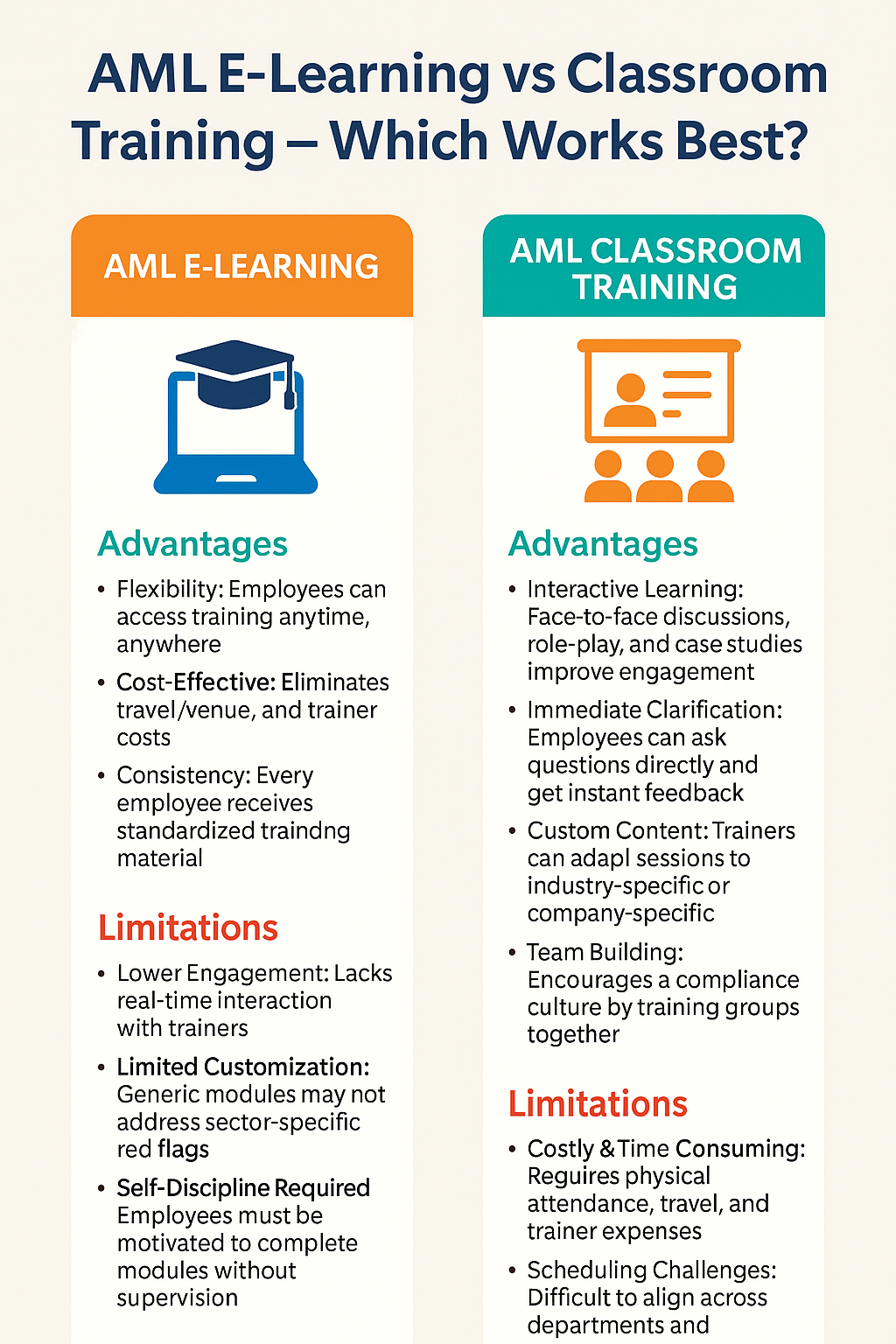
Advantages
• Flexibility: Employees can access training anytime, anywhere.
• Cost-Effective: Eliminates travel, venue, and trainer costs.
• Consistency: Every employee receives standardized training material.
• Scalability: Easily rolled out across multiple branches or locations.
• Tracking & Analytics: Progress, completion rates, and assessments can be monitored.
Limitations
• Lower Engagement: Lacks real-time interaction with trainers.
• Limited Customization: Generic modules may not address sector-specific red flags.
• Self-Discipline Required: Employees must be motivated to complete modules without supervision.
________________________________________
2. AML Classroom Training
Advantages
• Interactive Learning: Face-to-face discussions, role-play, and case studies improve engagement.
• Immediate Clarification: Employees can ask questions directly and get instant feedback.
• Custom Content: Trainers can adapt sessions to industry-specific or company-specific risks.
• Team Building: Encourages a compliance culture by training groups together.
Limitations
• Costly & Time-Consuming: Requires physical attendance, travel, and trainer expenses.
• Scheduling Challenges: Difficult to align across departments and branches.
• Limited Reach: Not scalable for organizations with large or global teams.
________________________________________
3. Hybrid Approach: Best of Both Worlds
Many UAE businesses now adopt a blended model:
• E-Learning for foundational AML knowledge and regulatory updates.
• Classroom Training for advanced case studies, STR filing workshops, and interactive sessions.
This ensures consistency, cost savings, and deeper engagement where it matters most.
________________________________________
4. Which Works Best for UAE Businesses?
• Small Firms/DNFBPs: E-learning is cost-effective and practical for ensuring compliance.
• Large Institutions: A hybrid approach balances scalability with in-depth learning.
• High-Risk Sectors (Gold, Real Estate, Legal): Classroom or hybrid sessions are preferable to address sector-specific risks.
Ultimately, the choice should align with a risk-based approach, ensuring employees receive training that is practical, relevant, and meets UAE regulatory requirements.
________________________________________
📩 For customized AML training (e-learning and classroom programs) tailored to UAE DNFBPs and financial institutions, contact us:
Sheikh Anwar Accounting & Auditing LLC
🌐 www.sa-auditors.com
📧 info@sa-auditors.com

