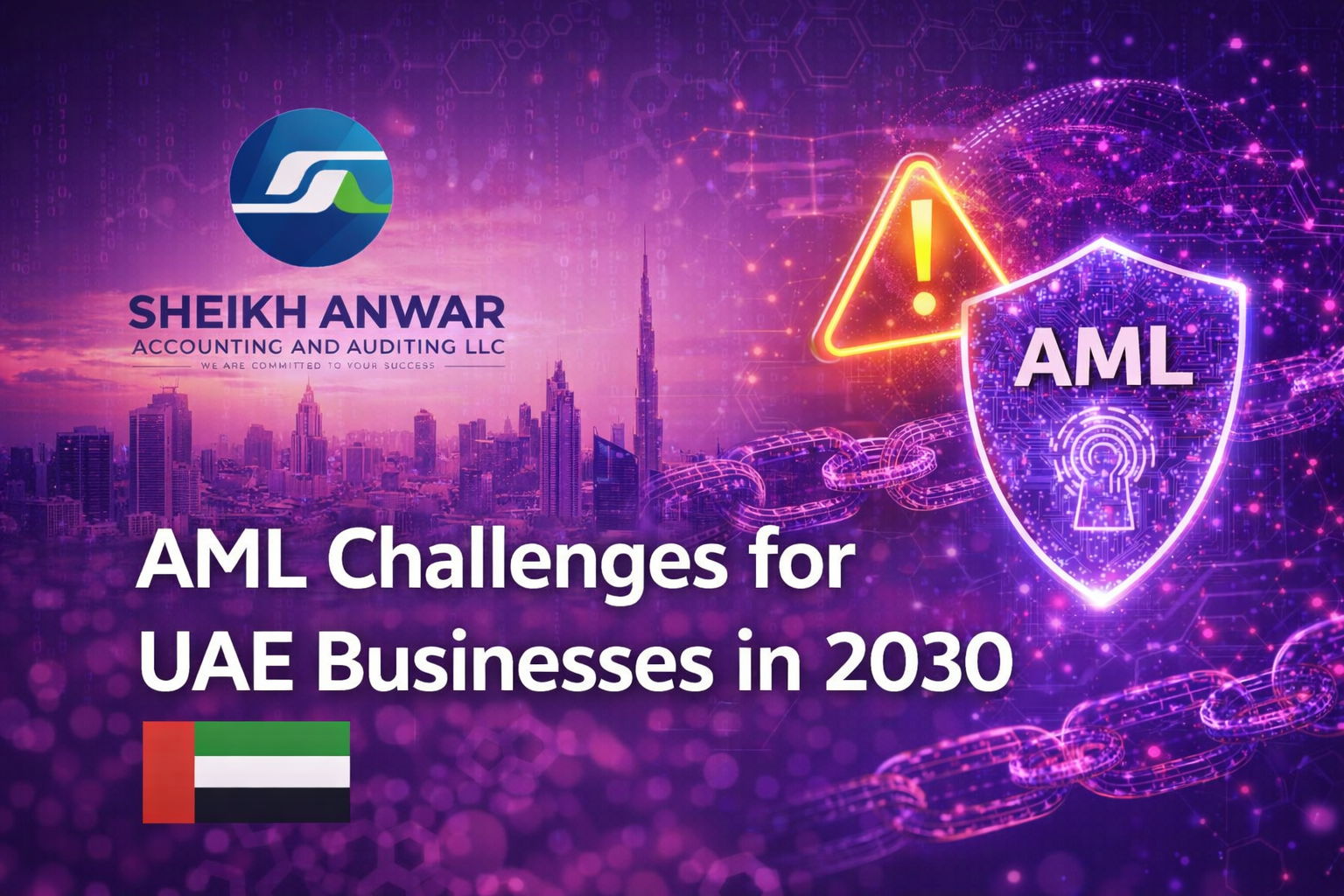
AML Challenges for UAE Businesses in 2030
Introduction
The United Arab Emirates has positioned itself as a global financial and trade hub, attracting investors, multinational companies, and high-value trade sectors such as gold, real estate, and financial services. While this growth strengthens the economy, it also increases exposure to financial crimes such as money laundering and terrorism financing.
As global financial systems become more complex and digitalized, Anti-Money Laundering (AML) compliance will continue to evolve. By 2030, UAE businesses will face new regulatory expectations, technological challenges, and increasing scrutiny from global regulators. Organizations operating in the UAE must prepare today to address the AML risks of the future.
________________________________________
1. Increasing Regulatory Expectations
The UAE has significantly strengthened its AML regulatory framework in recent years to align with international standards such as those issued by the Financial Action Task Force (FATF). By 2030, regulators are expected to implement even stricter compliance requirements.
Businesses will likely face:
• More frequent regulatory inspections
• Higher penalties for non-compliance
• Greater documentation and reporting requirements
• Enhanced risk-based supervision
Companies must therefore develop strong internal AML programs and ensure continuous compliance with evolving regulations.
________________________________________
2. Growing Complexity of Financial Crimes
Financial criminals are constantly adapting their methods to bypass regulatory controls. By 2030, money laundering schemes may involve more sophisticated techniques, including:
• Trade-based money laundering
• Complex cross-border financial networks
• Shell companies and hidden beneficial ownership
• Digital asset laundering
This growing complexity will make it increasingly difficult for businesses to detect suspicious activities using traditional AML systems.
________________________________________
3. Rise of Digital Finance and Virtual Assets
The rapid expansion of fintech, digital payments, and cryptocurrencies will create new AML risks for businesses in the UAE. Virtual asset service providers, crypto exchanges, and digital finance platforms will require stronger AML controls.
Challenges may include:
• Monitoring anonymous blockchain transactions
• Identifying beneficial ownership in digital wallets
• Managing risks related to decentralized finance (DeFi)
Companies dealing with digital assets must adopt advanced monitoring technologies to remain compliant.
________________________________________
4. Data Management and Technology Challenges
As AML regulations become more technology-driven, businesses will need to invest heavily in compliance technology.
Future AML systems will require:
• Artificial intelligence for transaction monitoring
• Advanced data analytics tools
• Real-time compliance monitoring systems
• Integrated regulatory reporting platforms
However, implementing such technologies can be costly and complex, especially for small and medium-sized enterprises.
________________________________________
5. Increased Responsibility for DNFBPs
Designated Non-Financial Businesses and Professions (DNFBPs) such as auditors, accountants, real estate brokers, and precious metals dealers are already under AML regulations in the UAE. By 2030, regulatory oversight for these sectors is expected to become even stricter.
These businesses will need to:
• Conduct stronger customer due diligence
• Maintain detailed AML documentation
• Implement ongoing monitoring systems
• Submit suspicious activity reports promptly
Failure to comply may lead to heavy financial penalties and reputational damage.
________________________________________
6. Shortage of Skilled AML Professionals
As AML regulations become more complex, the demand for skilled compliance professionals will increase significantly. Businesses may struggle to recruit qualified AML specialists, compliance officers, and financial crime analysts.
This shortage may lead to:
• Increased compliance costs
• Operational inefficiencies
• Greater reliance on automated compliance systems
Investing in employee training and AML awareness programs will be essential.
________________________________________
7. Global Cooperation and Cross-Border Compliance
Money laundering is often international in nature, involving multiple jurisdictions and financial systems. UAE businesses operating globally will need to comply with international AML standards and cooperate with regulators across different countries.
Future AML compliance will require:
• Cross-border regulatory coordination
• Enhanced information sharing
• Compliance with multiple regulatory frameworks
Organizations must adopt global compliance strategies to manage these complexities.
________________________________________
Conclusion
By 2030, AML compliance in the UAE will become more demanding as financial crimes evolve and regulatory expectations increase. Businesses must adapt to these changes by investing in advanced technologies, strengthening internal compliance frameworks, and building skilled compliance teams.
Organizations that proactively prepare for future AML challenges will not only avoid regulatory penalties but also enhance their reputation, build trust with regulators, and strengthen their position in the global financial market.
________________________________________
Sheikh Anwar Accounting & Auditing LLC
Experts in AML Compliance, Corporate Tax, VAT Advisory, and Risk Management Services in the UAE.
🌐 Website: www.sa-auditors.com
📧 Email: info@sa-auditors.com
📞 Phone: +971 50 941 7664
📍 Address: Dubai Creek Tower, M-35, Dubai, United Arab Emirates